This guide matters because many modern publishing workflows do not start with a file already hosted somewhere. They start with an asset generated by ChatGPT, Claude, Gemini, an internal tool, or another automation step.
Auto Post availability
RSS Feed remains available on all plans, including LTD. AI Prompt and AI remix require unlimited AI text credits or active AI Studio. Document, YouTube Video, and E-commerce workflows require Pro; existing LTD workflows using those sources are stopped. Blog URL availability is unchanged. Basic bulk and recurring publishing remain part of LTD.
What Postly can ingest
Postly can accept media from several common sources:
- base64 payloads
- data URLs
- direct file uploads
- public URLs
- inline media imports during post creation or update
Why base64 is valuable
Base64 is useful when your system already has the media in memory. Instead of forcing a separate hosting step first, the workflow can send the media directly into Postly.
That is especially helpful for:
- AI-generated images
- AI-generated videos
- server-side automation pipelines
- CMS plugins with generated assets
- agent workflows that already have the file bytes available
Best pattern for AI clients
If ChatGPT, Claude, or another client generates the media and still has access to it, the strongest pattern is:
- generate the asset
- keep the same turn or request flow active
- pass the media directly into Postly
- create or update the post immediately
This works only when the client can transmit the file bytes or provide a reachable URL. Postly cannot read an assistant’s local file path, private sandbox link, or temporary reference on its own. If the client cannot transfer the asset, upload it through Postly Cloud.
For large URL imports, preparation may still be processing. Wait for media readiness before creating or scheduling the post; an accepted import is not confirmation that the post exists or has published.
What this does not mean
It does not mean every temporary reference lasts forever. If the client loses access to the asset between steps, Postly cannot recover media it never received. That is why same-flow ingestion matters.
If the asset already has a stable public URL, that can also be a clean ingestion path. Use the format that matches the workflow you already have.
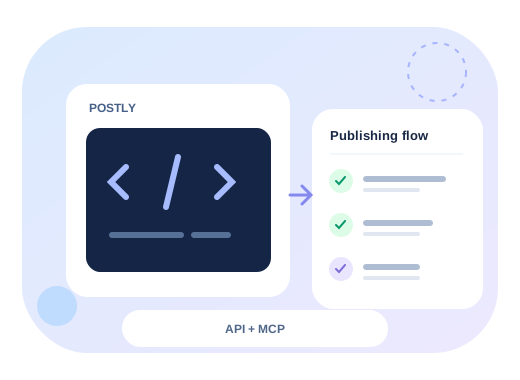
API vs MCP
Use API when
your backend, app, or automation system owns the media and the publish action.
Use MCP when
an AI assistant owns the conversation and needs scoped publishing actions inside the same governed workflow.