Every unique connection to a social account profile is a Social Account, e.g. a Facebook account connection. The Facebook pages will not count toward your billing.
For example, if you connect (1) Facebook account with 10 pages, (2) Twitter / X accounts, (1) Bluesky account, and (1) Google Business Profile with 5 locations, you're managing (5) Social Accounts.
Postly pricing is primarily based on the number of social channels you connect. You can start small and scale up anytime by adding more channels. As your channel count increases, the price per channel decreases automatically based on tiered pricing.
Yes. You can increase or reduce your channel count at any time from the Plans & Billing page. Changes are applied immediately and prorated based on the time remaining in your billing cycle.
Add-ons unlock specialized capabilities on top of your existing Postly plan. They are optional and can be subscribed to independently without upgrading your main plan. Current add-ons include AI Studio, X-Pro, API Access, and Custom Telegram Bots.
Yes. Add-ons are billed monthly and can be enabled or canceled anytime before the next billing cycle. This allows you to activate them only when needed.
AI Studio provides AI-powered content creation tools including caption generation, marketing copy, AI image generation, and AI video creation. It helps you produce content faster while maintaining consistent brand messaging.
Postly X-Pro is the managed X publishing add-on. Connect through X’s secure authorization screen without creating or maintaining developer API keys. Each stack includes one managed X account and a protected monthly publishing allowance. It includes thread publishing, automation tools, smart quote discovery, engagement tracking, and growth analytics.
No. Technical users can bring their own X Developer API keys and let X bill their developer account directly. X-Pro is the recommended option for users who do not want to manage API keys, credits, or developer billing.
API Access allows developers and advanced users to connect Postly with other tools or internal systems. It enables automated publishing workflows, custom integrations, and external applications such as Google Sheets automation.
The Custom Telegram Bot add-on allows you to launch and manage a branded Telegram automation bot connected to your Postly workflows. It can be used for automated announcements, content distribution, alerts, and community engagement.
a. A Workspace is a dedicated page for your brand, product, or clients, where you can invite team members to collaborate on content strategy and publishing. b. Workspaces are secure and private—team members in different Workspaces cannot interact. c. A Free Plan user on a premium Workspace accesses premium features, and vice versa. d. Premium plans offer unlimited Workspaces.
a. You can allocate a separate Workspace per client. b. Each Workspace operates independently, with its own scheduling and publishing settings. c. Clients in separate Workspaces cannot view each other's content.
Each user only sees their own billing and account details. Most likely, they are on a free plan, and that is what they’ll see. No user, regardless of their role or team membership, can see another user’s billing plan or account details. This section is entirely personal.
Your invitation only grants them access to your workspace, not your account. Their account remains fully independent. They can manage their own workspaces separately, and the only overlap is when they switch to your shared workspace— where they can view, approve, or review posts based on permissions.
This usually happens when an existing organization or workspace name is selected by mistake during setup. To fix this, please choose to create a new organization and workspace during the setup process.
Yes. Postly CRM can match supported comments on connected Facebook Pages and Instagram professional accounts, publish one configured reply, optionally continue privately, and preserve the post and conversation context for your team.
Yes. Configure keyword, phrase, welcome, away, and fallback replies for supported Facebook Messenger and Instagram Direct conversations. One automation responds, then the conversation moves into Postly CRM for human takeover and follow-up.
You can publish to unlimited channels and pages per platform. There is no limit to the number of channels you can manage. You are only limited by the number of social accounts you can connect to Postly.
Note: Each unique connection to a social account profile is a Social Account e.g., a Facebook account connection. The Facebook pages will not count toward your billing.
a. API tokens expire once in a while - we have built a workaround to extend this to 12 months for most platforms. b. Signing out or changing passwords disconnects the accounts. c. Exceeding your daily post limit or violating platform policies may also cause disconnections.
It means you didn't accept all permissions when connecting your Facebook or Instagram account. Please disconnect and reconnect, ensuring you grant all requested permissions.
Avoid mixing different companies, clients, or brands in the same workspace.
If multiple clients use the same email, all locations appear under one workspace. Instead:
a. Create up to 200 workspaces, each linked to one client, or b. Use a unique email per client (e.g., client_name_yourname@gmail.com) to assign each workspace.
c. Or delegate connection by granting clients Admin access (remember to refresh connections every 60 days).
Learn how to create workspaces in bulk at the Workspace page
The OAuthException error indicates that your account's future activity history on Meta technologies (like Instagram or Facebook) is currently turned off. To resolve this, visit the Settings page of the affected account to turn off the necessary settings.
If you're unable to connect your LinkedIn account and see an error like: "Sorry, something went wrong. Please close the page and try again.", it may be because your LinkedIn profile is missing a profile photo.
Log in to your LinkedIn account directly.
Upload a clear profile picture to your LinkedIn profile (required by LinkedIn's API).
Wait a few minutes to ensure your profile updates successfully.
Return to Postly and try connecting your LinkedIn account again.
Once a profile photo is added, the connection should work normally. If the issue persists, please contact our support team at support@postly.ai.
Short answer: No. Postly publishes through official, platform-approved APIs (e.g., Instagram Graph API by Meta, LinkedIn Marketing API, X API v2, YouTube Data API, TikTok Business APIs, etc.). We never ask for your password or use unofficial methods.
If an account is ever flagged, common causes are:
It was previously connected to an unofficial tool or automation app.
There were rapid bursts of actions (posting/liking/following) across tools or devices.
A recent password, role/page, or token change caused a temporary session conflict.
Platform policy requirements weren’t met (e.g., Instagram requires a Business/Creator account connected to a Facebook Page for API publishing).
To stay safe:
Use Postly as your only scheduler; disconnect other apps or browser extensions that ask for credentials.
Reconnect accounts via the official OAuth flow if you change passwords, page roles, or permissions.
Avoid running multiple tools on the same account simultaneously.
Match the platform's required account type (e.g., Instagram Business/Creator + Facebook Page).
If you were flagged:
Remove any unofficial apps from your account settings.
Wait a short window (often 24–48 hours) for sessions to normalize.
Reconnect in Postly using the official OAuth prompt.
Resume with normal posting cadence and avoid rapid bursts of activity.
Need help? Reach us at support@postly.ai. Thousands of creators and brands publish safely through Postly's official API integrations every day.
Postly uses only official APIs from each platform — which means the platform itself determines what accounts, pages, or channels appear when you connect. Postly cannot modify or override what the API returns.
Below are the most common reasons why not all accounts show up, and what’s required for each platform:
LinkedIn: Only Super Admins can connect a Page. If your profile is a Content Admin, Analyst, or Editor, the Page will not appear during connection.
Facebook: You must be a Page Admin to connect. Editor or Moderator roles will not be recognized by the Facebook Graph API.
YouTube: Only your own verified channels will appear. Managed or brand channels that belong to another account or organization will not be listed unless you own them directly.
Google Business Profile: You need to be a Manager or Ownerof the business location. View-only or site manager roles are not sufficient for API access.
Other possible causes include:
Recent password change or revoked app permissions (tokens need to be refreshed).
Browser cache or session conflicts — try reconnecting via an Incognito/Private window.
Multiple platform accounts logged in at once — ensure you’re signed into the correct one before connecting.
Recent role updates not yet synced — some platforms take a few hours to refresh permissions via their API.
To fix this:
Log out of all platform accounts (LinkedIn, YouTube, Facebook, etc.).
Log back in with the account that owns or manages the target Pages or Channels.
Open Postly → Add Account → select the platform → follow the on-screen authorization (OAuth) process.
Once the platform confirms your access, the eligible Pages, Channels, or Profiles will appear automatically. These permissions are fully controlled by each platform’s API, not by Postly.
If you’ve confirmed your role and it still doesn't show up, try again after 24–48 hours or contact our team at support@postly.ai.
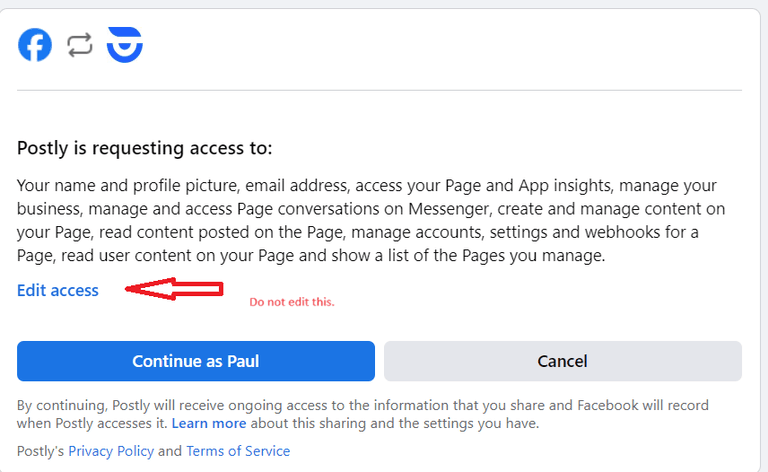
a. Ensure all permissions are accepted during account connection. b. Do not alter settings during the connection process for Facebook, Instagram, etc.
c. If you encounter error (#10), disconnect and reconnect your account after accepting all permissions. d. Reconnecting will not affect already scheduled posts. e. Logging out or changing passwords may disconnect your account—reconnect as needed.
Only Instagram Business or Professional Accounts can be published from the web. For personal profiles or Creator accounts, use the mobile app’s Share Post feature.
Yes, switching to a personal account will break your Instagram connection and cancel scheduled posts. Switch back to a professional account and reconnect to restore publishing.
a. YouTube Shorts are published automatically once you upload a video that meets the Shorts criteria: vertical and aligned with YouTube Shorts requirements. This happens even if you choose a different category ID while publishing. b. Ensure your video meets the 9:16 aspect ratio; the API converts qualifying videos automatically.
Postly auto-transforms images to meet platform requirements. If an image exceeds the limit, it's removed to avoid publishing issues. You’ll be notified via dashboard messages.
Reddit only displays a message body for text posts. If you publish a video, image, or link post, Reddit will only show the title - not the message body or caption. This is a limitation of Reddit's platform, not a bug in Postly.
If your post needs to include a message or explanation, we recommend using a text post with the video or link included in the body.
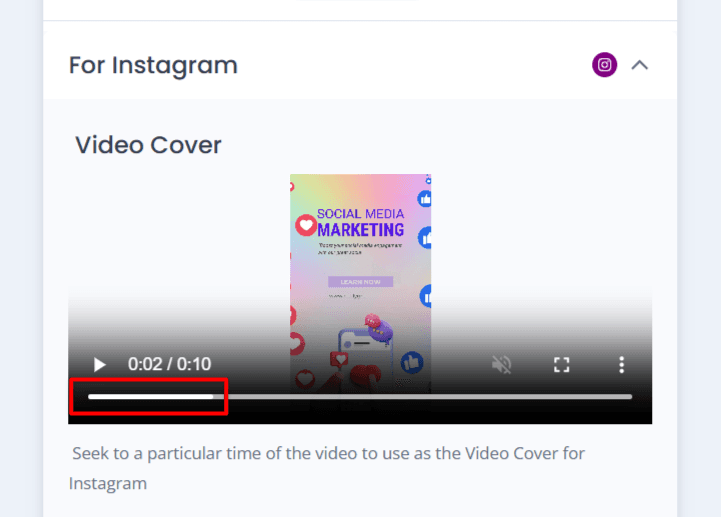
Yes, you can add thumbnails to YouTube, Pinterest, and Instagram. For YouTube and Pinterest, you can upload an image file, while for Instagram, the API requires that you use a section of the video frame for the thumbnail. Our tool will allow you to select this section by moving the timer to the specific section of the video that you want to use as the thumbnail image.
If you connect a platform and don't accept all required permissions, your posts will not be published, and you won’t see any error messages. This can lead to confusion about why publishing fails.
✅ To avoid this issue, make sure to accept all requested permissions during the connection process.
TikTok has strict publishing limitations for new accounts to prevent spam and abuse. If you're using Postly to publish content to a newly created TikTok account, your post might fail due to TikTok's automated spam detection.
🚫 New TikTok accounts are more likely to trigger these restrictions, especially when using third-party tools like Postly.
✅ We recommend manually publishing from the TikTok app for a while, engaging with content, and gradually integrating Postly once your account builds more credibility.
Many social platforms automatically compress or optimize files uploaded through third-party APIs to save bandwidth and storage. This can result in slightly reduced sharpness or resolution compared to uploads made directly from the platform’s official app.
For example, Instagram's in-app option "Upload at highest quality"ensures top-tier resolution, but that setting isn’t accessible via the API — meaning tools like Postly must rely on the platform’s default compression rules.
Always upload the highest-quality version of your image or video.
Avoid reusing files that were previously compressed or downloaded from social media.
Ensure your file meets the platform’s optimal size and format (e.g., JPEG for images, MP4 for videos).
📸 Following these steps helps minimize quality loss even when the platform performs compression during upload.
Postly automatically optimizes your media per platform. When you upload multiple images or videos, Postly adjusts formatting, ordering, and limits based on each platform’s native requirements (carousel limits, thumbnail handling, aspect ratios, etc.). You’ll receive smart prompts if adjustments are needed before publishing.
Postly Cloud is your built-in media storage system. Upload, organize, and reuse images and videos across workspaces without re-uploading every time. It helps you centralize brand assets, campaign creatives, and evergreen content for faster publishing.
Yes. Postly integrates with Canva, allowing you to design graphics and import them directly into your Postly Media Library. Combined with Postly Cloud, this makes asset management seamless from design to publishing.
Yes. With Postly Cloud, you can reuse previously uploaded media across posts, campaigns, and connected social channels. This reduces duplication, speeds up scheduling, and keeps your brand assets consistent.
Yes. Each end-user must have their own Postly account. The expected flow is similar to other SaaS products — you invite the user, they sign up on Postly, and then switch into the shared workspace from their dashboard to access your system.
You create and manage the workspace structure, but clients own their accounts and connect their own social channels. You simply invite them into the correct workspace, and your app interacts with Postly via the API using that workspace context.
Yes. A single API key can access all workspaces and social accounts available on your dashboard account. The recommended approach is to separate clients using different workspaces and route API requests to the appropriate workspace when publishing.
Use workspaces to isolate each client. Store a mapping in your app between your client records and their corresponding Postly workspace and social account IDs. When triggering posts, send requests using the correct workspace and account combination.
The client connects their own social accounts directly inside their assigned workspace. Social accounts are managed at the workspace level, not at the main account level.
No. Social accounts are not shared globally across workspaces. They are connected and managed within each individual workspace, keeping client setups isolated and easier to scale.
The client is responsible for reconnecting their social accounts when required. This is done from within their workspace, where the account was originally connected.
Channel limits are applied per account and are considered a global component. This means capacity is tied to the owning account rather than distributed individually across each workspace.
Starter plan users are limited to 2 connected channels and 50 one-time posts. However, when clients are invited into your premium workspace, they operate within that workspace’s capabilities and benefit from its premium features, including expanded publishing limits and scheduling options.
No. You can use a single API key across multiple clients and workspaces. However, you may choose to generate multiple keys for different environments (e.g., staging vs production) or for better internal separation of systems.