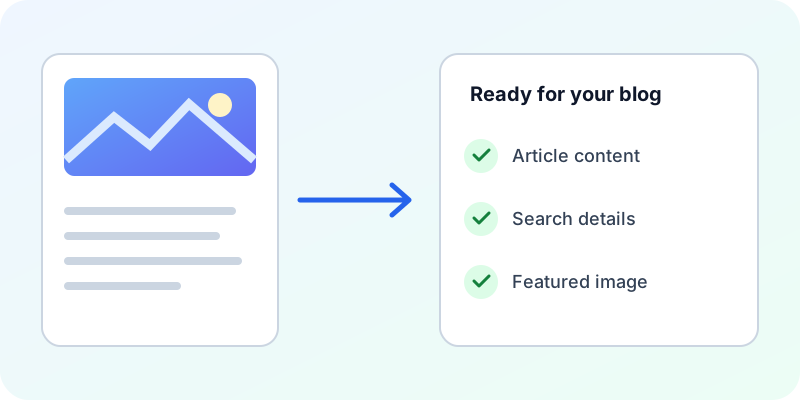
Postly uses the same publishing services for dashboard posts, bulk CSV, connected Google Sheets, API requests and MCP tools. Each blog has different fields and permissions. Select the destination first, then prepare its supported settings.
| Blog | Search details | Images and social previews |
|---|---|---|
| WordPress | SEO title, description and canonical through your installed SEO plugin | Featured attachment or uploaded image with alt text; plugin-dependent Open Graph and X overrides |
| Ghost | Native SEO title, description and canonical | Featured image, alt text, caption, separate Open Graph and X fields |
| Hashnode | SEO title, description and canonical for drafts and published articles | Cover image and Open Graph image; separate social text overrides are unavailable |
| DEV.to | Article title, description and canonical | Main image and body images; no separate SEO title or Open Graph/X overrides |
| Blogger | Article title and labels | Images in the HTML body; the API does not expose custom SEO descriptions, canonicals or social overrides |
Prepare the article
- Choose the connected blog in the composer and open its settings.
- Set the article title and the supported search fields. WordPress also has an SEO plugin selector.
- Select the featured or cover image where supported. A social preview image is a separate field; setting one does not replace the article's featured image.
- Add meaningful alt text where available. Existing WordPress media-library attachments keep their current alt text; edit those in WordPress if needed.
- Preview body images for each destination. Destination-specific media overrides are used when supplied.
For remote image URLs, use a publicly reachable image, not a sharing page, login page or expiring URL. Postly preserves the image file type and filename when uploading to WordPress and Ghost. The destination still enforces its permitted formats, file-size limits and upload permissions.
Review delivery
Open the publishing result. A WordPress post can be created successfully while SEO delivery needs review. The result retains the article link and shows a warning if the SEO writer rejects the request or does not confirm the supplied values.
Do not publish the article again to fix SEO. Open the existing article in WordPress, correct permissions or plugin setup, and save its metadata there. Postly does not automatically recreate the article after an optional SEO failure.
For a published article, view the public page after clearing the relevant site/CDN cache. Check the page's title, meta description, canonical, Open Graph image and X image. Plugin settings, themes and caching can affect the final output. Saving metadata is not a promise that a search engine will display the supplied description; crawlers may choose their own snippet. Drafts have no public page to inspect yet.